
Devotion vs discipline: discipline lives in the head, devotion lives in the body. Learn how to return to devotion in your soul work, starting with the throat.
There is a moment many of us are very familiar with: the work we once felt called to starts to feel like a job. We still show up, we still deliver, but something essential and real has gone quiet.
The difference between devotion vs discipline is where they live. Discipline is a mental decision that pushes us forward, even when our energy says no. Devotion is a whole-body state that arises when we are receptive and filled with something greater than ourselves. You can’t force devotion, but you can return to it.
This post is a channeled exploration of that return: what devotion really means, where it lives in the body, and the doorways that bring it back into your soul work.
I’m Very Good at Discipline
I am a very self-disciplined person and I carry that discipline into every part of my life. I know how to show up, force myself, do what I “should.” Growing up, this type of sustained focus was valued and rewarded both at home and at school. One might even say that school was all about developing self-discipline.
Yet, despite all this self-imposed structure, I’ve noticed that when discipline takes over, there’s very little room left for devotion. And devotion is important to me and my spiritual work. Devotion, for me, means being so filled with spirit or love that you want to serve its expression on earth. Soul work is not a fixed destination, and I’ve written before about how life purpose is a living, evolving set of soul qualities rather than one thing you find and keep.
What Does Devotion Really Mean?
Devotion comes from Latin: ‘devovere’, which means to dedicate by a vow, to promise solemnly. It combines ‘de’, meaning down or away, with ‘vovere’, to vow or make a promise to God. In Church Latin, ‘devotio’ came to mean piety, and it reached English through the Old French devocion.
It evolved from a sacred, religious term to a more secular meaning of deep love and loyalty for people and causes. Interestingly, devotion was always a vow, and a vow is spoken aloud. Which is perhaps why, as you’ll see, devotion lives where the voice does.
What Is the Difference Between Devotion and Discipline?
This is my personal take: discipline stays in the head, it feels mental; devotion comes down into the body, it’s more of a feeling, a body-felt experience. Discipline is a decision you make while devotion is a state of being that you fall into or cultivate.
Discipline feels yang to me, the active, outward-moving energy in Chinese philosophy, and it can be forceful, pushing when the energy doesn’t support it. That “should” feeling creeps up in discipline. It also feels very structured, contained and serious.
Devotion feels more yin, the receptive, inward counterpart to yang. Yin is also our deep source of renewal, something I explored in why menopause can be a second spring rather than a decline. It is much more organic, heart-centered and receptive. It also feels more spontaneous, creative and flowy in its essence.
| Discipline | Devotion |
|---|---|
| Lives in the head | Lives in the body |
| A decision | A state of being |
| Yang: active, pushing | Yin: receptive, allowing |
| Driven by "should" | Drawn by love |
| Structured and serious | Spontaneous, creative, flowing |
| Can be forced | Can only be returned to |
Why Can’t Devotion Be Forced?
Devotion is shown to me as a whole-body experience, an embodiment. Embodiment isn’t always easy, and I’ve shared my own journey of learning to feel good in a body that never felt safe . It can’t be reached mentally even if you decide to. It arises when we are receptive, and when we remember that we are a vessel, only a vessel, for something bigger than us, with or without a name.
As a channel, I know this feeling intimately. I need to be very grounded and focused whilst being open, loose and allowing for what is wanting to come through. Receptivity needs space, and Pause & Integrate offers a daily moment to stop and let what you’ve received land.
Where Does Devotion Live in the Body?
This question stayed with me the whole time I channeled this post; I was convinced that devotion lived in my heart because it’s such a heart-centered experience. Yet the answer was that devotion lived in my throat. Not a constantly open throat, but a place asking to be opened, with reverence.
It clearly came through as the bridge between head and heart, the place where the vow is spoken and where what we receive becomes expression and love.
Devotion was also shown to me as a two-way exchange: energy rising from the earth (yin) and descending from the heavens (yang), meeting in the body and finding their voice through the throat.
I’m curious, if you were to ask your body where devotion lived, what do you think it would say to you?
Your body knows the answer better than anyone else, which is why your body is the real expert on you.
What Energy Medicine Says About the Throat Chakra
In Eden Energy Medicine, Donna Eden and David Feinstein describe the throat chakra as containing seven distinct chambers, each corresponding to one of the seven chakras.
The left chambers correspond to the more yin chakras (sacral, heart and third eye) and the right chambers to the more yang chakras (root, solar plexus, and throat). The role of the throat chakra is to process information from the other six chakras, breaking it down and rebuilding it into something new.
These chambers can become congested or compressed, preventing you from expressing your truth. The energy of the 7th chakra comes through the central chamber, at least during the times in our life when we are enjoying harmony among all our chakras. When that harmony is missing, the throat chakra’s own energy moves into the central chamber to help harmonize everything, and the crown energy shifts to the far right chamber.
This raises the question of the direct connection between harmony and devotion. Do you have to be in harmony to be in devotion, or can it be accessed even when your energies are out of balance? My own experience, which I share below, suggests devotion doesn’t have to wait for harmony. Sometimes it is what clears the way to it.
Donna Eden even suggests an exercise to stretch your throat chakra so that it can express its full authenticity.
How Do Singing and Chanting Open the Throat to Devotion?
It made me question the role of singing and chanting in devotion. I wondered whether opening and clearing the throat is what allows the energy of the 7th chakra, the crown, to come through into the body harmoniously, so that love can be felt and expressed authentically.
Science offers some intriguing support. In a 2001 study published in the BMJ, researchers found that reciting the Ave Maria prayer and yoga mantras slowed breathing to roughly six breaths per minute, which synchronized and strengthened the body’s natural cardiovascular rhythms.
In a 2011 pilot study in the International Journal of Yoga, researchers proposed that the vibration of chanting “OM” aloud stimulates the vagus nerve through its branch in the ear, and brain scans showed calming of the limbic system, the brain’s emotional center. The vagus nerve links the brain to the heart and gut and is central to the body’s relaxation response.
Across traditions, singing and chanting are used to clear blockages, encourage authenticity, connect heart and mind, and invite flow states. Sound has always been one of my favorite healing modalities, and I’ve written about the frequencies that heal the soul.
Devotion would therefore be the trigger and the fruit of truth, authentic communication, and creative self-expression.
How Do You Return to Devotion When Discipline Takes Over?
I’m sure there are many paths to devotion. My own doorways to devotion are:
Nature and the feeling of oneness it creates when we are open to it, because nature effortlessly brings us into a state of devotion and openness.
Singing, chanting and anything that moves energy through the throat.
Beauty, creativity, and states of flow.
Connection with those we love.
Receptivity.
Intention: the desire to be devoted.
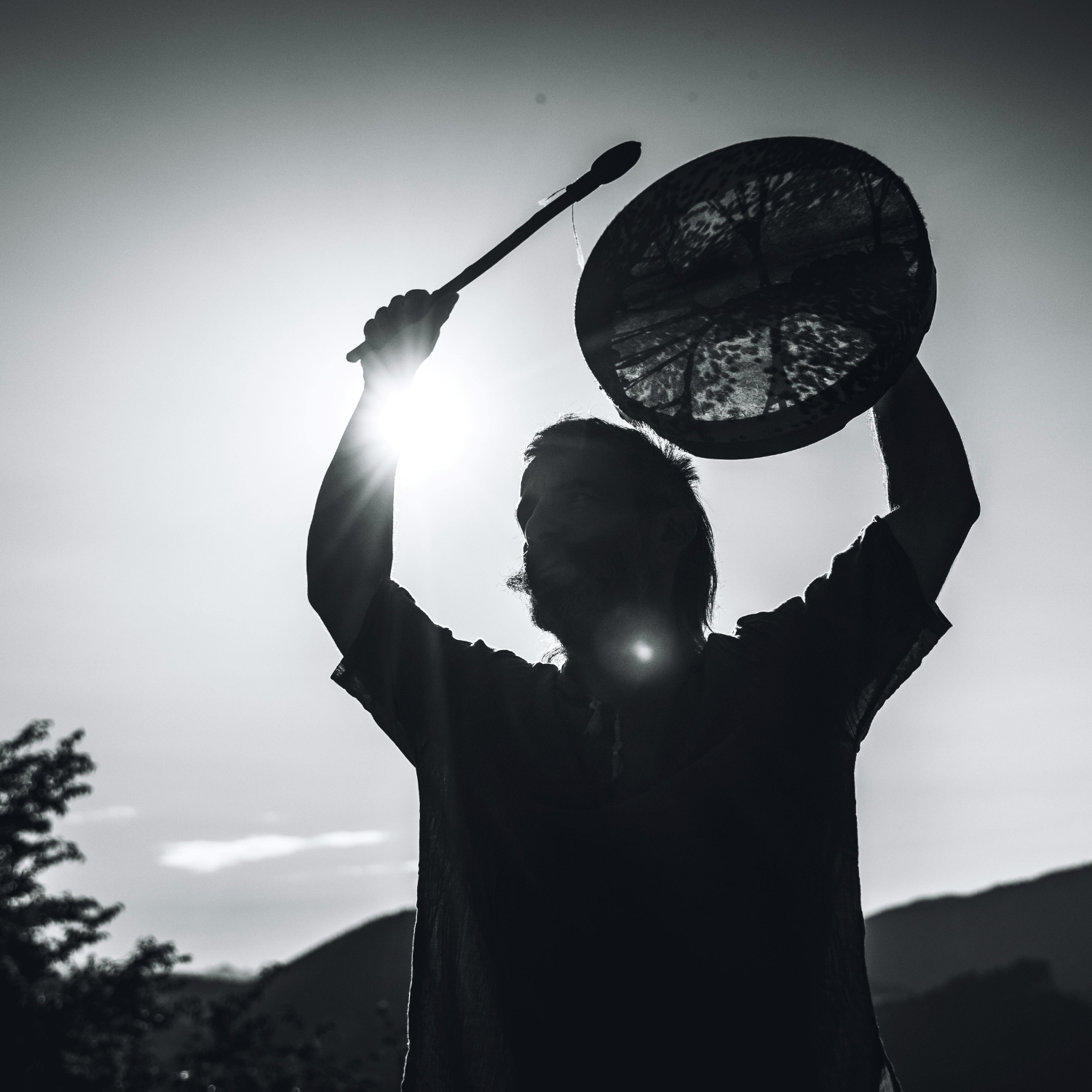
Writing this post sparked an interesting (and very humbling) response in me. I thought, well, if I need to induce devotion, let’s do it to see what it feels like. I pulled out my buffalo drum and just started sounding out, then letting through whatever wanted to come through.
It wasn’t pretty or eloquent. It felt very raw and real. And my throat felt very sore afterwards. I’m sure the neighbors felt very sorry for themselves too. I know my dogs did.
But it was also liberating: it opened a part of me that felt stifled, sticky and rusty. I felt so much anger surface afterwards.
Do We Still Need Discipline?
Maybe this is where discipline finds its rightful place. Maybe the discipline is for me to continue showing up 5 minutes a day with my drum despite the anxious looks my dogs give me, the fear of annoying my neighbors and being made fun of by my family. If devotion has to come through the throat on the voice, I need to practice allowing it.
So yes, I think we still need discipline, but a different type of discipline, one that is closer to reverence and that can simply be about showing up daily without a fixed agenda.
Discipline tends to push whereas reverence bows. So when devotion isn’t flowing yet, we don’t have to force it; we can approach it with reverence and choose to walk toward the places where it arises. Discipline becomes the willingness to walk to the door. Devotion is what meets us there.
And sometimes the vessel simply needs refilling before anything can flow through it, which is why I created Yin Replenished, a light language activation to refill your deep reserves.
FAQs: Devotion vs Discipline
Q: What is the difference between devotion and discipline?
A: Discipline is a mental decision that pushes you to act, often driven by “should.” Devotion is a whole-body state of being that arises from love and receptivity. Discipline is yang energy; devotion is yin. Both have their place, but devotion is what makes soul work feel alive.
Q: Where does devotion live in the body?
A: For me, devotion lives in the throat, the bridge between head and heart, where a vow is spoken and what we receive becomes expression. Your body may answer differently, so ask it directly and listen to what comes.
Q: What does devotion feel like at first?
A: Not always beautiful. When I first sang with my buffalo drum, it felt raw, my throat was sore, and anger surfaced. Devotion can begin by clearing what has been stifled before it flows freely.
Q: Can you be devoted and disciplined at the same time?
A: Yes. The most supportive discipline is close to reverence: showing up daily without a fixed agenda. Discipline brings you to the door, and devotion is what meets you there once you are receptive.
Q: How do you return to devotion in your work?
A: Return through the doorways that open you: nature, singing or chanting, beauty and creativity, connection with loved ones, receptivity, and the intention to be devoted. Devotion can’t be forced, but it can be invited.
Returning to Devotion
Discipline lives in the head and pushes; devotion lives in the body and flows. When your soul work starts to feel like obligation, you don’t need more effort, just to return to the vessel you already are.
If you’re wanting to connect to your work and life through the lens of devotion, your throat is probably asking to be opened and nurtured.
I created the Cosmic Devotion light language activation to help with opening the throat with reverence, drawing energy up from the earth and down from the cosmos so devotion can flow through as service.
New to light language? Start here.